
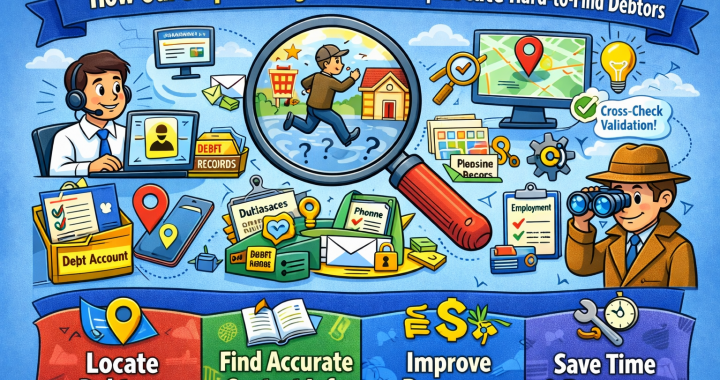
Recovering outstanding debt becomes significantly more challenging when a debtor is difficult to locate. Whether contact information is outdated, incomplete, or intentionally concealed, these accounts can stall your recovery efforts and impact your bottom line.
That’s where professional skip tracing comes in.
Skip tracing is a specialized process used to locate individuals or businesses that have become difficult to reach. By combining advanced technology, verified data sources, and investigative expertise, our skip tracing services help you reconnect with hard-to-find debtors and move accounts toward resolution.
What Is Skip Tracing?
Skip tracing is the process of identifying and locating a person or business whose whereabouts are unknown or whose contact information is no longer valid.
In the collections industry, this often involves:
- Finding updated phone numbers and email addresses
- Verifying current residential or business addresses
- Identifying employment information
- Confirming ownership of assets or business affiliations
The goal is simple: obtain accurate, actionable contact information that allows for effective communication and recovery.
Why Debtors Become Difficult to Locate
There are many reasons why a debtor may become hard to find, including:
- Moving without updating contact information
- Changing phone numbers or email addresses
- Providing incomplete or inaccurate details initially
- Business closures or restructuring
- Intentional avoidance of creditors
Regardless of the reason, outdated or incorrect data can quickly bring collection efforts to a halt.
How Our Skip Tracing Process Works
Our skip tracing services are designed to go beyond basic database searches. We use a layered approach that combines technology, data intelligence, and human analysis.
1. Data Verification and Analysis
We start by reviewing the information you already have, including applications, contracts, and prior contact details. This helps identify patterns, connections, and potential leads.
2. Advanced Database Searches
We leverage multiple reputable data sources to uncover updated contact information. These sources may include:
- Credit header data
- Public records
- Utility and address databases
- Business filings
- Phone and email directories
3. Cross-Referencing and Validation
Not all data is reliable. We cross-check information across multiple sources to ensure accuracy before taking action. This reduces wasted effort and improves contact success rates.
4. Digital Footprint Analysis
In today’s connected world, individuals and businesses leave digital traces. We analyze publicly available online activity and digital indicators to identify potential contact points.
5. Ongoing Monitoring
Skip tracing is not always a one-time effort. When necessary, we continue monitoring for new data updates, ensuring that opportunities to reconnect are not missed.
Benefits of Professional Skip Tracing
Improved Recovery Rates
Accurate contact information increases the likelihood of reaching the debtor and resolving the account.
Faster Resolution
By eliminating outdated or incorrect data, skip tracing reduces delays and helps move accounts forward more efficiently.
Cost Efficiency
Spending time and resources on incorrect information can be costly. Targeted skip tracing helps focus efforts where they are most likely to succeed.
Better Decision-Making
With more complete information, creditors can make informed decisions about next steps, including negotiation or legal action.
Supporting Both Consumer and Commercial Accounts
Skip tracing is effective for both consumer and commercial collections.
- Consumer Accounts: Locate individuals who have moved or changed contact information
- Commercial Accounts: Identify business owners, decision-makers, or responsible parties, including those tied to personal guarantees
In commercial cases, skip tracing can also help uncover related entities, business relationships, and potential asset information.
Compliance and Ethical Standards
While skip tracing is a powerful tool, it must be conducted responsibly and in compliance with applicable laws and regulations.
Our approach emphasizes:
- Use of lawful and reputable data sources
- Respect for privacy and data protection standards
- Compliance with federal and state regulations
- Ethical and professional investigation practices
This ensures that all efforts to locate a debtor are both effective and compliant.
When Should You Use Skip Tracing?
Skip tracing is especially valuable when:
- Mail is returned undeliverable
- Phone numbers are disconnected
- Emails bounce back
- A debtor has stopped responding
- You suspect outdated or incorrect information
Early use of skip tracing can prevent accounts from becoming increasingly difficult to recover over time.
Final Thoughts
Locating a hard-to-find debtor doesn’t have to mean writing off the account. With the right tools and expertise, it’s often possible to uncover accurate, up-to-date information and reestablish communication.
Our skip tracing services are designed to help you overcome one of the biggest challenges in debt recovery—finding the right person.
If you have accounts that have gone cold due to bad contact information, skip tracing may be the key to getting them back on track and moving toward resolution.