
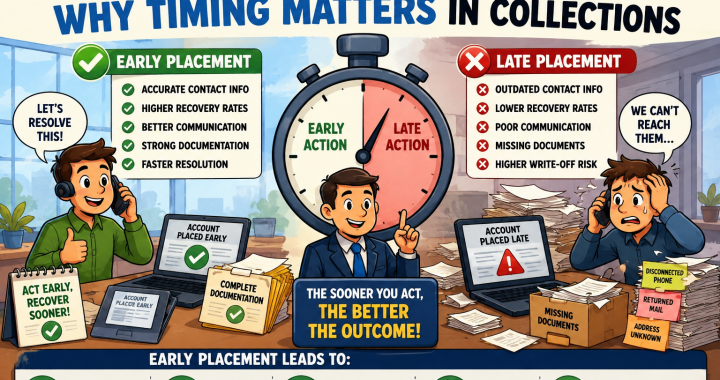
When it comes to debt recovery, timing can make a significant difference in the outcome. One of the most common mistakes businesses make is waiting too long to place delinquent accounts for collection.
The longer an account remains unpaid, the more difficult it often becomes to recover. Early placement gives creditors a better opportunity to resolve accounts efficiently, improve recovery rates, and reduce long-term collection costs.
In this article, we explain why timing matters in collections and how early placement can benefit your business.
What Is Early Placement?
Early placement refers to submitting delinquent accounts to a collection agency shortly after internal collection efforts have become unsuccessful.
Rather than allowing accounts to age for extended periods, businesses transfer them to professional recovery specialists while the likelihood of successful contact and payment remains higher.
Although every industry operates differently, many creditors find that accounts become increasingly difficult to collect as they age.
Why Timing Matters in Debt Collection
1. Contact Information Is More Likely to Be Accurate
One of the biggest challenges in collections is locating the debtor. As time passes, people and businesses may:
- Move to new addresses
- Change phone numbers
- Switch email accounts
- Close businesses or relocate operations
Early placement increases the chances that existing contact information is still valid, making communication more effective from the start.
2. Recovery Rates Often Decline Over Time
In general, the probability of recovering debt decreases as accounts age.
Older accounts are more likely to involve:
- Financial hardship
- Bankruptcy filings
- Business closures
- Disputed documentation
- Loss of communication
Acting early helps prevent accounts from becoming increasingly difficult to resolve.
3. Debtors May Prioritize Newer Obligations
Consumers and businesses often prioritize debts that are receiving immediate attention. When accounts remain inactive for long periods, they may fall lower on the debtor’s priority list.
Professional collection activity early in the process can encourage faster engagement and resolution.
4. Documentation Is Easier to Maintain
As time passes, important records may become harder to locate. Early placement helps preserve:
- Contracts and agreements
- Invoices and statements
- Payment histories
- Communication records
- Supporting documentation
Strong documentation improves the ability to validate accounts and support collection efforts if disputes arise.
The Financial Impact of Delayed Collections
Waiting too long to address delinquent accounts can affect more than recovery rates. It can also impact overall business performance.
Outstanding receivables can create:
- Cash flow disruptions
- Increased administrative costs
- Reduced operational flexibility
- Higher write-off risk
Early intervention helps businesses improve cash flow and reduce the burden of managing aging receivables internally.
Early Placement Supports More Efficient Recovery Strategies
When accounts are placed early, collection agencies can take advantage of:
- More accurate debtor information
- Better communication opportunities
- Faster negotiation timelines
- Higher engagement rates
This allows agencies to implement recovery strategies before accounts become severely aged or inactive.
Commercial vs. Consumer Accounts
Timing is important in both commercial and consumer collections, although the risks may differ.
Consumer Accounts
Delayed action can lead to disconnected phone numbers, address changes, and increased financial instability.
Commercial Accounts
In business collections, delays may result in:
- Company closures
- Asset transfers
- Ownership changes
- Increased creditor competition
Early placement can help businesses act before financial conditions worsen.
When Should an Account Be Placed for Collection?
Every business has different internal processes, but warning signs that an account may need professional collection assistance include:
- Repeated missed payment deadlines
- Unreturned calls or emails
- Broken payment arrangements
- Returned mail or disconnected numbers
- Internal collection efforts no longer producing results
The sooner these issues are addressed, the better the chances of recovery.
Preserving Customer Relationships While Acting Early
Some businesses hesitate to place accounts early because they worry about damaging customer relationships.
However, professional collection agencies understand the importance of balancing recovery efforts with respectful communication and compliance. Early placement does not necessarily mean aggressive action—it often means resolving issues before they escalate further.
Final Thoughts
In collections, time matters.
Delaying action on delinquent accounts can reduce recovery opportunities, increase operational costs, and make communication more difficult. Early placement gives businesses a stronger chance of resolving accounts while information is still accurate and engagement is still possible.
By acting promptly and strategically, businesses can improve recovery outcomes, protect cash flow, and reduce the long-term impact of unpaid accounts.