
In the collections industry, communication is a critical part of resolving outstanding accounts. However, there are situations where a debtor may request that collection communications stop entirely by submitting a cease and desist letter.
For creditors, understanding how cease and desist letters work is important for maintaining compliance, protecting recovery efforts, and managing accounts appropriately.
In this article, we explain what cease and desist letters are, how they affect collection activity, and what creditors should know when these requests arise.
What Is a Cease and Desist Letter?
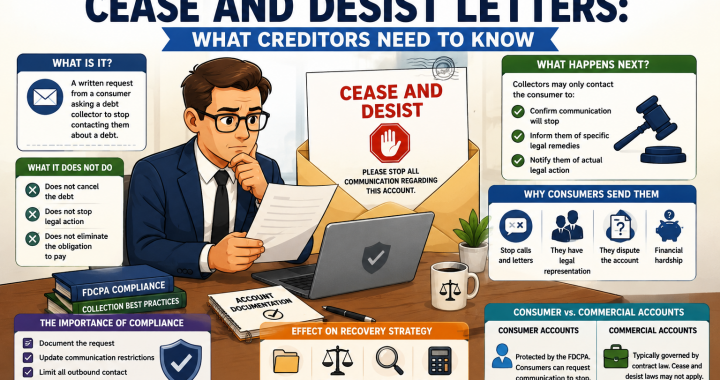
A cease and desist letter is a written request directing a debt collector to stop contacting a consumer regarding a debt.
Under the Fair Debt Collection Practices Act (FDCPA), consumers have the right to request that debt collectors cease communication. Once a valid written request is received, collection agencies must generally stop most forms of communication with the consumer.
This applies primarily to consumer debts involving personal, family, or household purposes.
What Happens After a Cease and Desist Letter Is Received?
After receiving a valid cease and desist request, a collection agency may only contact the consumer under limited circumstances, such as:
- Confirming that communication efforts will stop
- Informing the consumer of specific legal remedies that may be pursued
- Notifying the consumer of actual legal action being taken
Outside of these limited exceptions, continued communication may create compliance risks.
For creditors, this means the account often transitions into a different stage of the recovery process.
Cease and Desist Does Not Eliminate the Debt
One of the most common misconceptions is that a cease and desist letter makes the debt disappear. It does not.
A cease and desist request only limits communication—it does not:
- Cancel the balance owed
- Prevent lawful collection efforts
- Eliminate the possibility of litigation
- Remove contractual obligations
Creditors may still have legal remedies available depending on the account status, documentation, and applicable laws.
Why Consumers Submit Cease and Desist Requests
Consumers may send cease and desist letters for several reasons, including:
- Avoiding collection calls or letters
- Seeking legal representation
- Disputing the account
- Experiencing financial hardship
- Attempting to manage communications more formally
In some cases, consumers are simply exercising their legal rights under federal law.
The Importance of Compliance
Handling cease and desist requests improperly can expose collection agencies and creditors to legal and regulatory risks.
Proper compliance procedures may include:
- Promptly documenting the request
- Updating account communication restrictions
- Verifying receipt dates
- Limiting outbound contact appropriately
- Maintaining accurate records of all communications
Professional collection agencies use established compliance protocols to ensure these requests are handled correctly.
How Cease and Desist Letters Affect Recovery Strategy
Once direct communication is restricted, creditors may need to evaluate alternative recovery options.
Depending on the circumstances, this may include:
- Reviewing account documentation
- Evaluating litigation potential
- Assessing account collectability
- Communicating through authorized legal representatives
- Determining whether continued recovery efforts are economically practical
Each account should be reviewed individually to determine the most appropriate next steps.
Consumer vs. Commercial Accounts
Cease and desist protections under the FDCPA generally apply to consumer debts—not commercial obligations.
Consumer Accounts
Consumer accounts are subject to strict communication regulations and cease communication rights under federal law.
Commercial Accounts
Business-to-business collections typically operate under contract law rather than the FDCPA. While professional standards still apply, commercial debtors generally do not have the same cease communication protections as consumers.
This distinction is important when determining how accounts should be managed.
Why Documentation Matters
Strong documentation becomes especially important when communication restrictions are involved.
Key records may include:
- Signed agreements or contracts
- Payment history
- Account statements
- Prior communication records
- Copies of cease and desist requests
Well-organized documentation helps creditors evaluate recovery options and maintain compliance throughout the process.
Working With a Professional Collection Agency
Experienced collection agencies understand how to properly manage cease and desist situations while protecting creditor interests.
A professional approach helps ensure:
- Compliance with applicable laws
- Accurate account handling
- Proper documentation management
- Strategic evaluation of recovery options
- Reduced regulatory risk
Having established procedures in place is essential when dealing with communication-sensitive accounts.
Final Thoughts
Cease and desist letters are an important part of consumer protection laws and must be handled carefully. While these requests limit communication, they do not eliminate the underlying debt or necessarily end the possibility of recovery.
For creditors, understanding how cease and desist requests affect collections can help ensure accounts are managed legally, strategically, and professionally.
By working with experienced recovery professionals and maintaining strong compliance procedures, businesses can continue protecting their interests while respecting consumer rights.